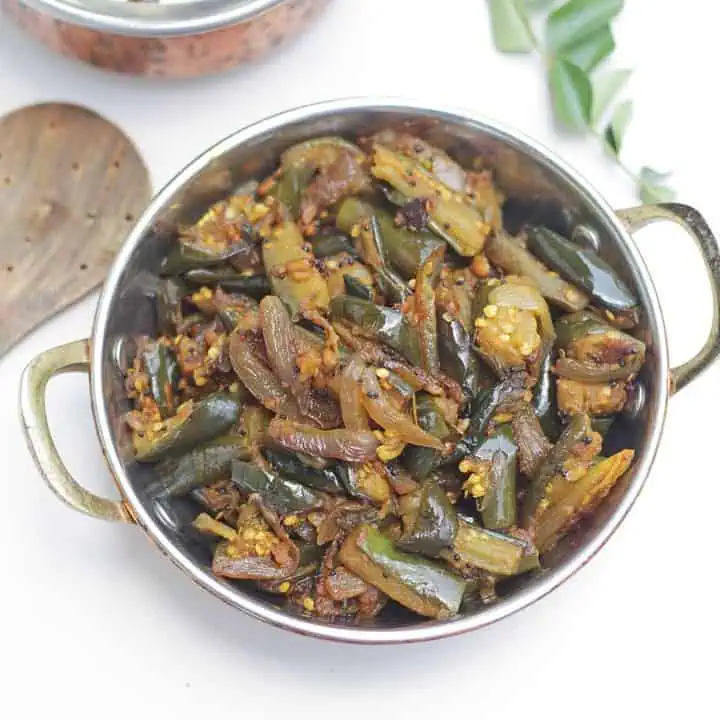

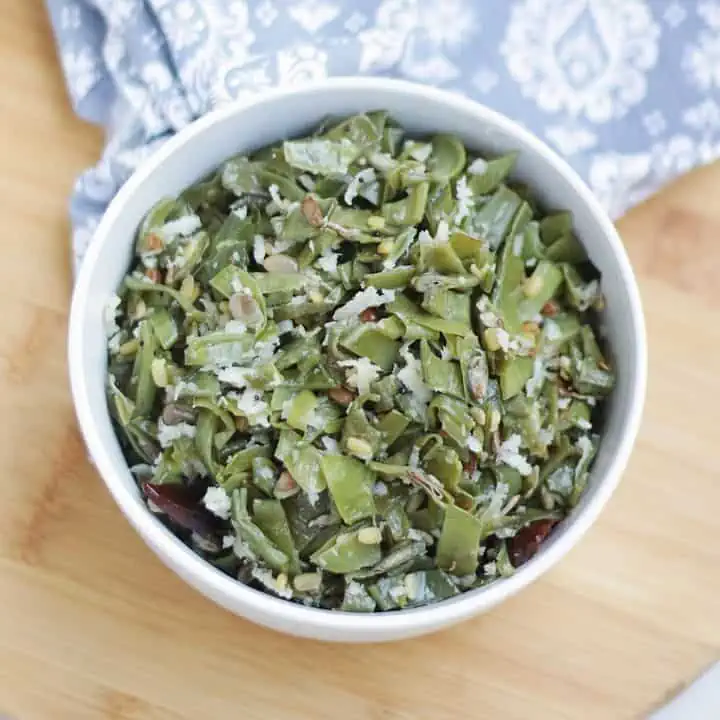
Kothavarangai Poriyal – Cluster Beans Stir-Fry with Coconut
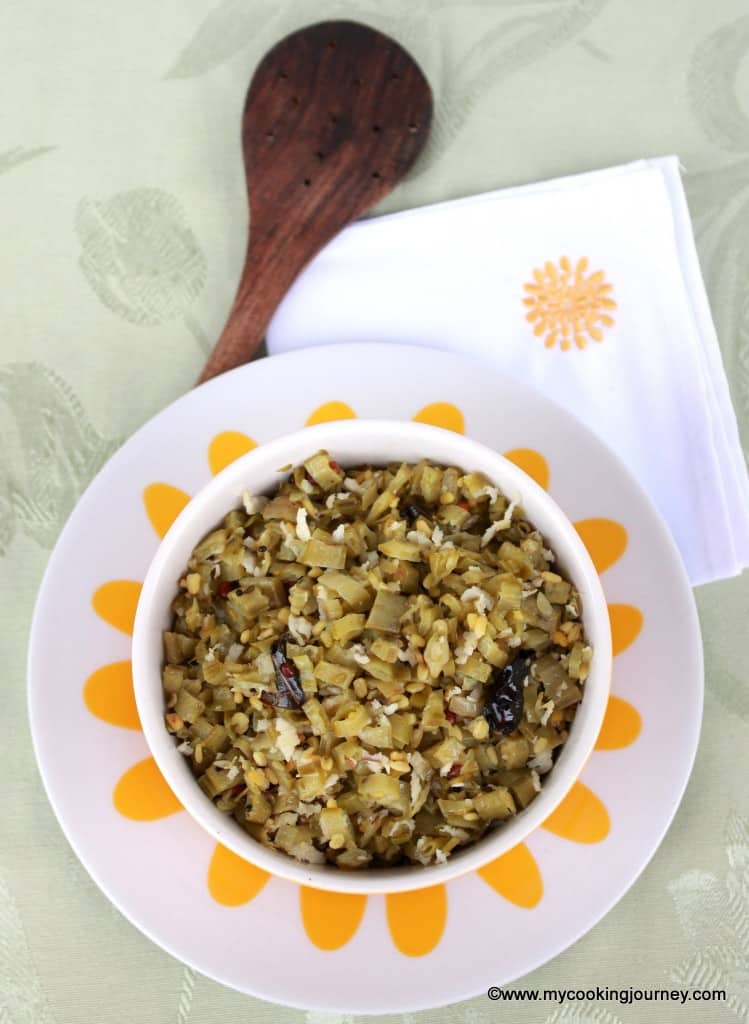
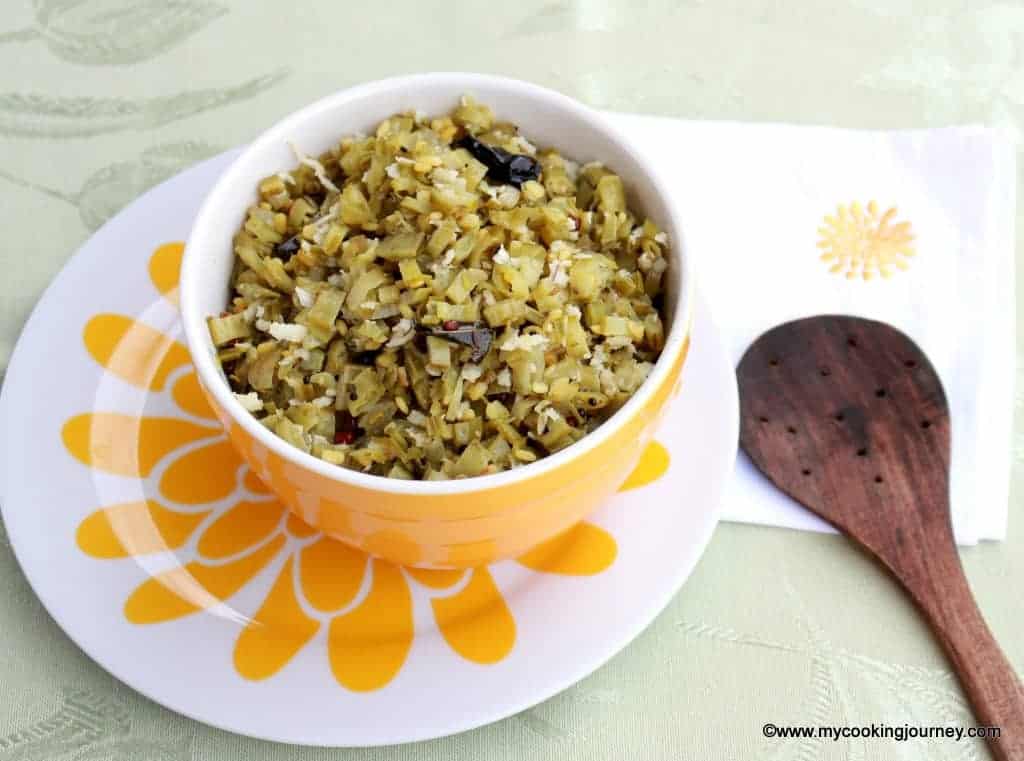
Kothavarangai Poriyal with coconut is one of my favorite recipes that is very easy to make. It is an excellent side dish for a traditional South Indian meal
Finding fresh kothavarangai / cluster beans in Indian stores is quite hard. Also, they are pretty expensive and hence I always just pick a handful to make paruppu usilli or sambhar.
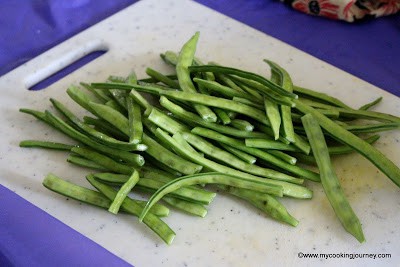
Last time, it was just my husband who made a quick run to the stores and when he saw fresh kothavarangai, he bought almost a pound of it back home.
Although I love this kothavarangai, I was not happy with how much he had spent on it. So instead of making paruppu usilli, I decided to make my favorite Kothavarangai Poriyal with coconut and once I ate it to my heart's content, I thanked him for having bought a large amount of it.
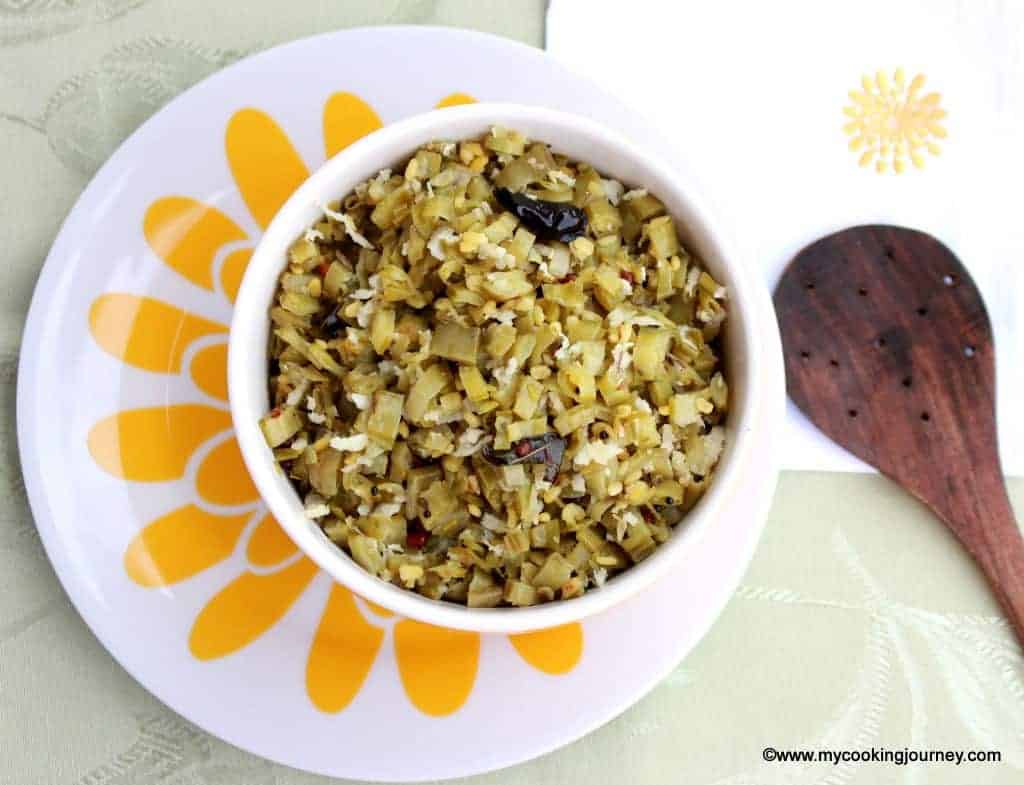
I made this just as I would make Beans curry / poriyal. I like this over beans a tad bit more because of its crunchiness and I am one person who loves curry / poriyal like this with curd rice.
As I am already craving more while I am writing this post, I guess it is time to send my husband on one more trip by himself to the Indian stores.
In doing the theme of regional dishes for this week's BM. I chose Tamil Nadu dishes as I did not have much planning done this month and hence could not venture out with any different cuisine.
Thanks to my drafts I have a few recipes under Tamil Nadu cuisine.
Preparation time - 15 minutes
Cooking time - 30 minutes
Difficulty level - easy
Ingredients to make Kothavarangai Poriyal - serves 4
- Kothavarangai / Cluster beans / Guvar - 250 gms
- Payatham Paruppu / Moong dal - 3 tbsp
- Coconut (grated) - ¼ cup
- Mustard seeds - 1 tsp
- Ullutham paruppu / Urad dal - 1 tsp
- Red chilies - 2 or 3
- Asafetida - ⅛th tsp
- Curry leaves - few
- Salt - to taste
- Sugar - 1 tsp
- Oil - 2 tsp
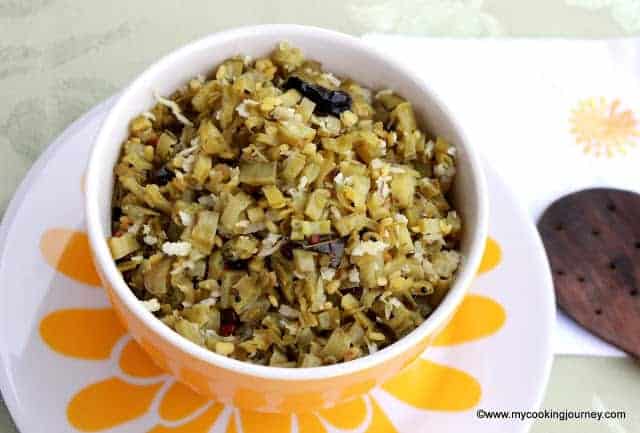
Procedure to make Kothavarangai Poriyal -
- Trim the ends and chop the kothavarangai into fine pieces. Place them in a deep pot and add the Moong dal (washed) as well. Fill it up with just enough water to immerse the vegetable.
- Cook the vegetable on medium flame until it comes to a boil and then simmer until the moong dal and the vegetable is almost cooked. You can add a pinch of turmeric powder when it is cooking. Add salt when the vegetables are almost cooked and let it simmer for a couple of more minutes for the vegetables to absorb the salt.
- Strain the vegetable in a colander and let it sit for a few minutes for all the water to drain.
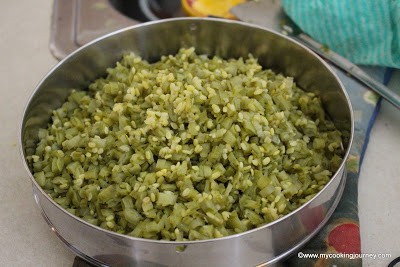
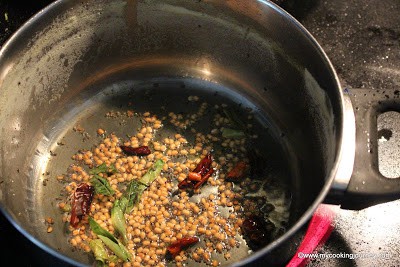
- In the same pan as you cooked the vegetable, add 2 teaspoon of oil. Once the oil heats up, add the mustard seeds, urad dal, red chilies, curry leaves, and asafetida. Let it fry for about 30 seconds or until the dal turns golden brown.
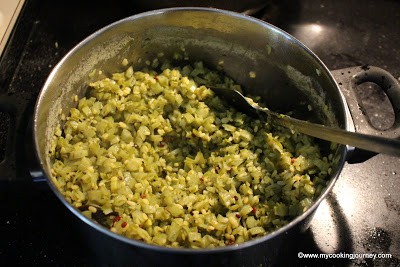
- Now add the strained vegetables and mix well to coat. Add sugar and let it cook for 2 - 3 minutes so that all the extra moisture evaporates. Keep mixing as they tend to stick to the bottom of the pan.
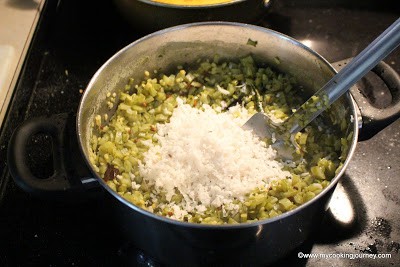
- Now add the grated coconut and mix well. Cook further for about 30 seconds and then turn off the flame.
- Serve with rice and sambhar/rasam!
Similar Recipes
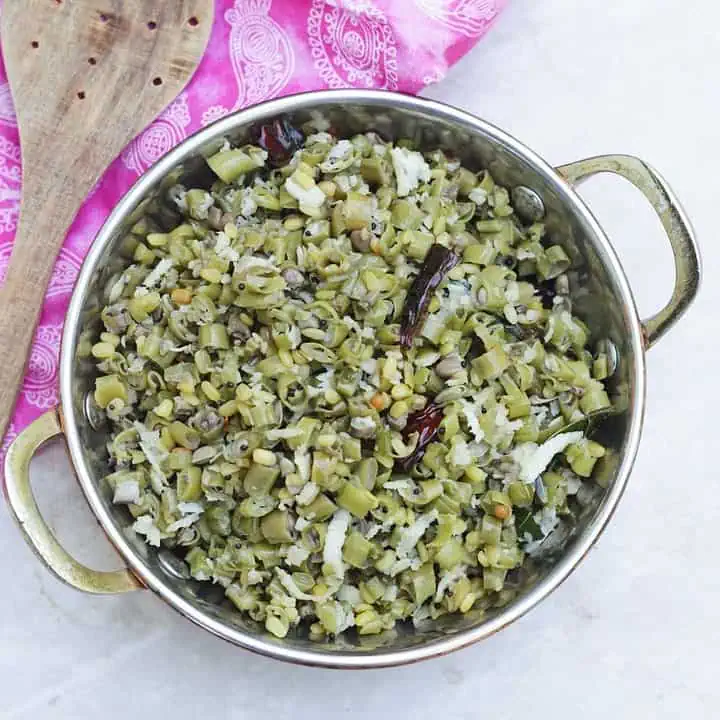
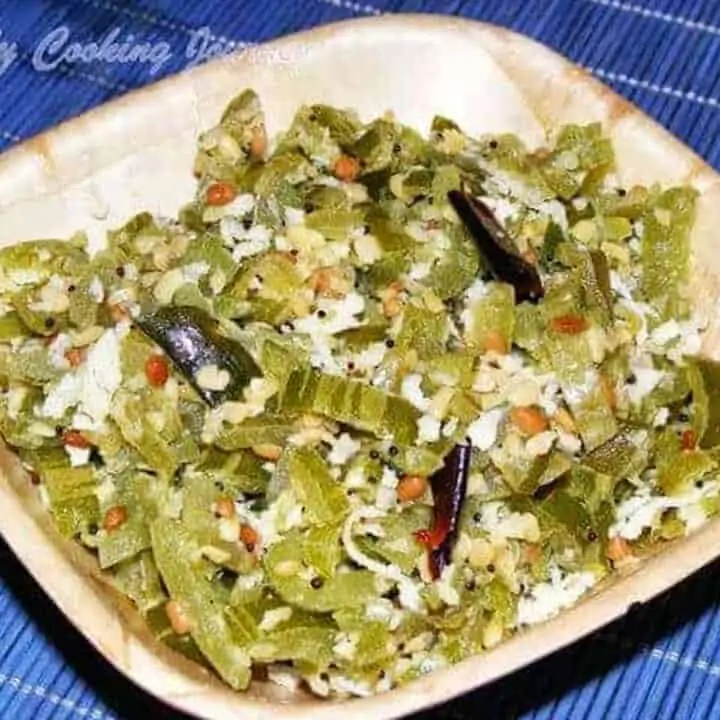
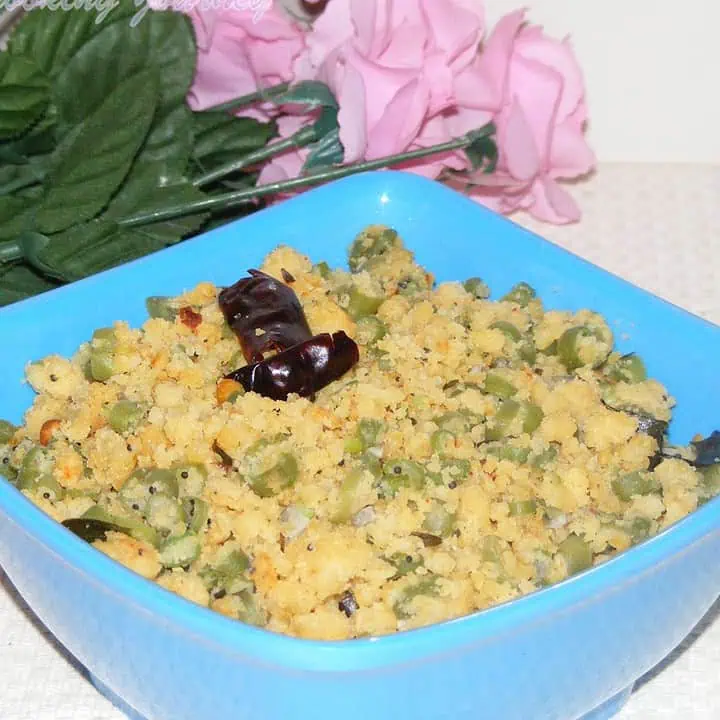
If you made this recipe and liked it, give a star rating on the recipe card or let me know in the comments below. You could also share it with me on Instagram using #MyCookingJourney and tagging me @sandhya.ramakrishnan. You could follow me and my recipes on Facebook |Instagram | Pinterest | Twitter/X
Recipe
Kothavarangai Poriyal - Cluster Beans Stir-Fry with Coconut
Ingredients
- 250 gms Kothavarangai / Cluster beans / Guvar
- 3 tbsp. Payatham Paruppu / Moong dal
- ¼ cup Coconut Grated
- 1 teaspoon Mustard seeds
- 1 teaspoon Ullutham paruppu / Urad dal
- 2 Red chilies
- ⅛th teaspoon Asafetida
- few Curry leaves
- to taste Salt
- 1 teaspoon Sugar
- 2 teaspoon Oil
Instructions
- Trim the ends and chop the kothavarangai into fine pieces. Place them in a deep pot and add the Moong dal (washed) as well. Fill it up with just enough water to immerse the vegetable.
- Cook the vegetable on medium flame until it comes to a boil and then simmer until the moong dal and the vegetable is almost cooked. You can add a pinch of turmeric powder when it is cooking. Add salt when the vegetables are almost cooked and let it simmer for a couple of more minutes for the vegetables to absorb the salt.
- Strain the vegetable in a colander and let it sit for a few minutes for all the water to drain.
- In the same pan as you cooked the vegetable, add 2 teaspoon of oil. Once the oil heats up, add the mustard seeds, urad dal, red chilies, curry leaves, and asafetida. Let it fry for about 30 seconds or until the dal turns golden brown.
- Now add the strained vegetable and mix well to coat. Add sugar and let it cook for 2 - 3 minutes so that the all the extra moisture evaporates. Keep mixing as they tend to stick to the bottom of the pan.
- Now add the grated coconut and mix well. Cook further for about 30 seconds and then turn off the flame.
- Serve with rice and sambhar/rasam!