
Pondicherry Sambar | A special Sambhar from Puducherry
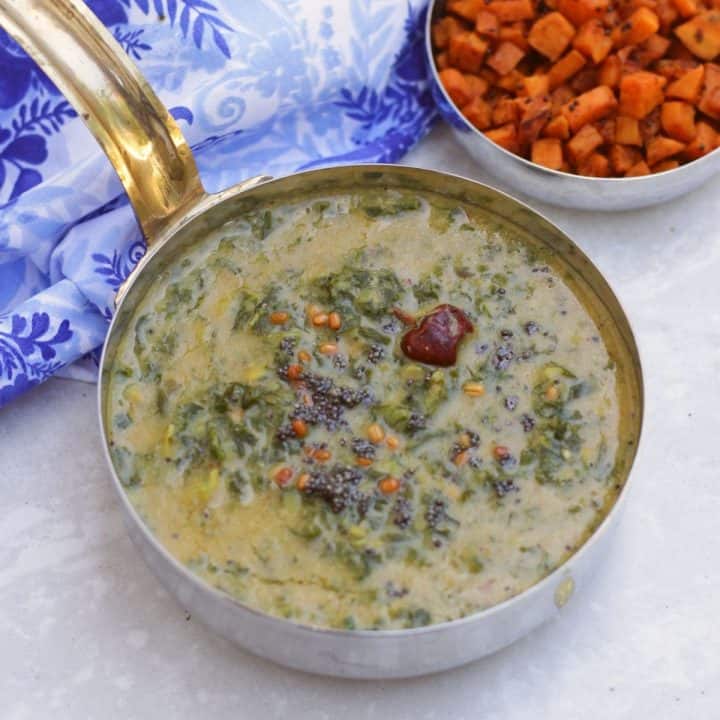
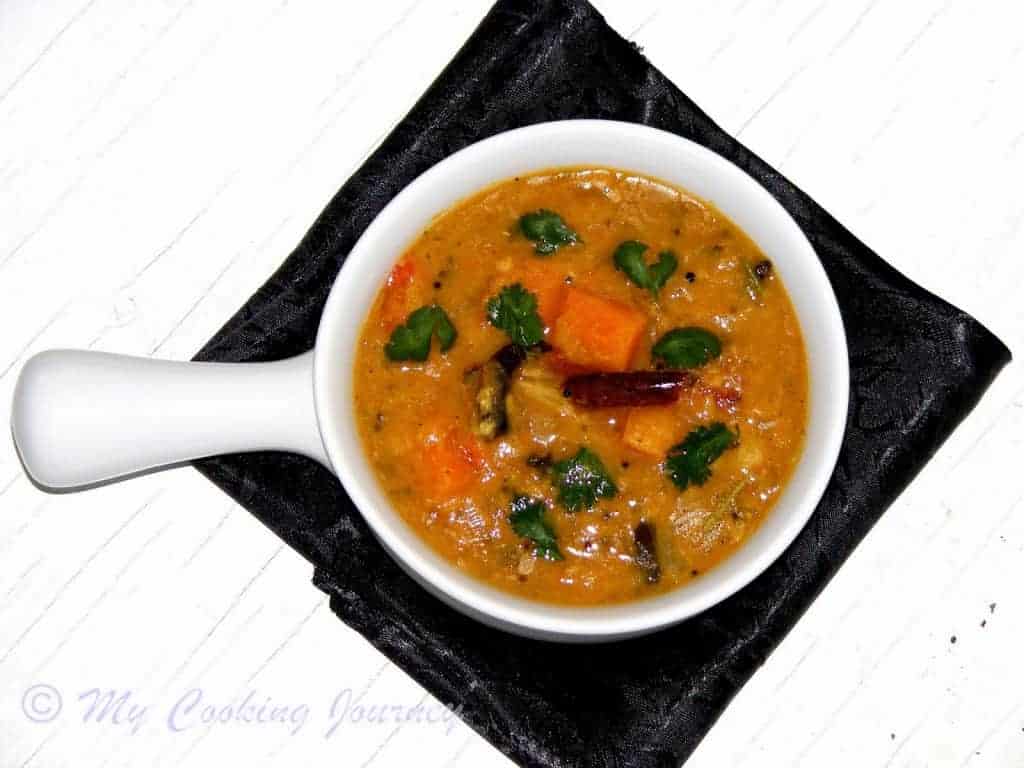
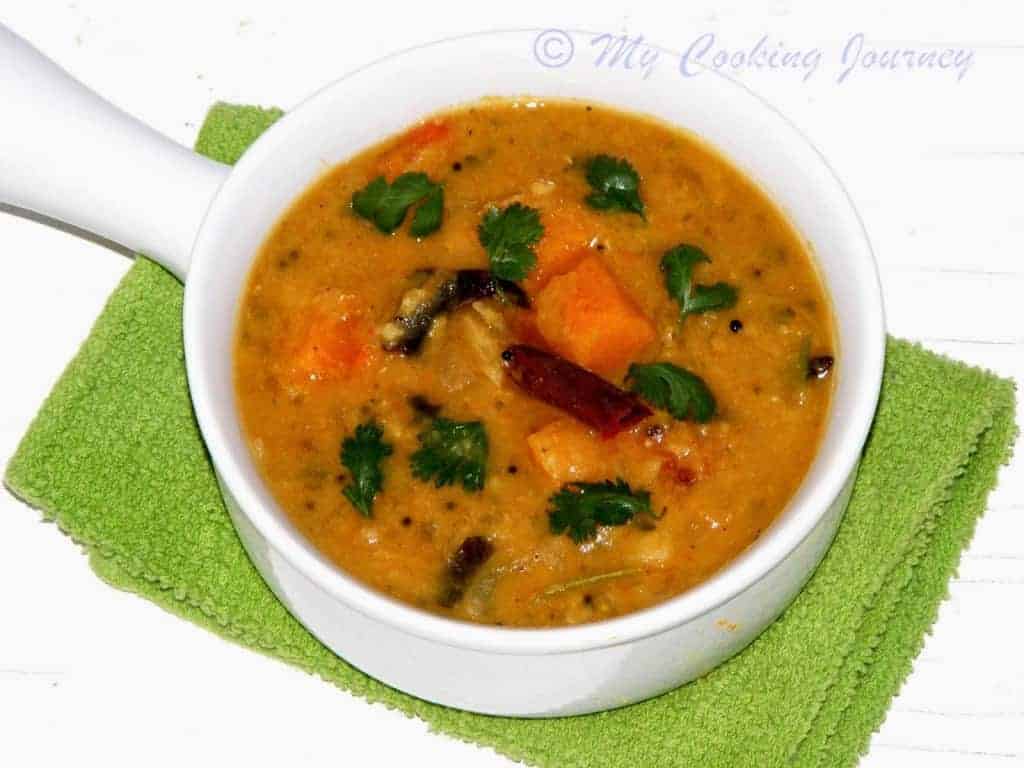
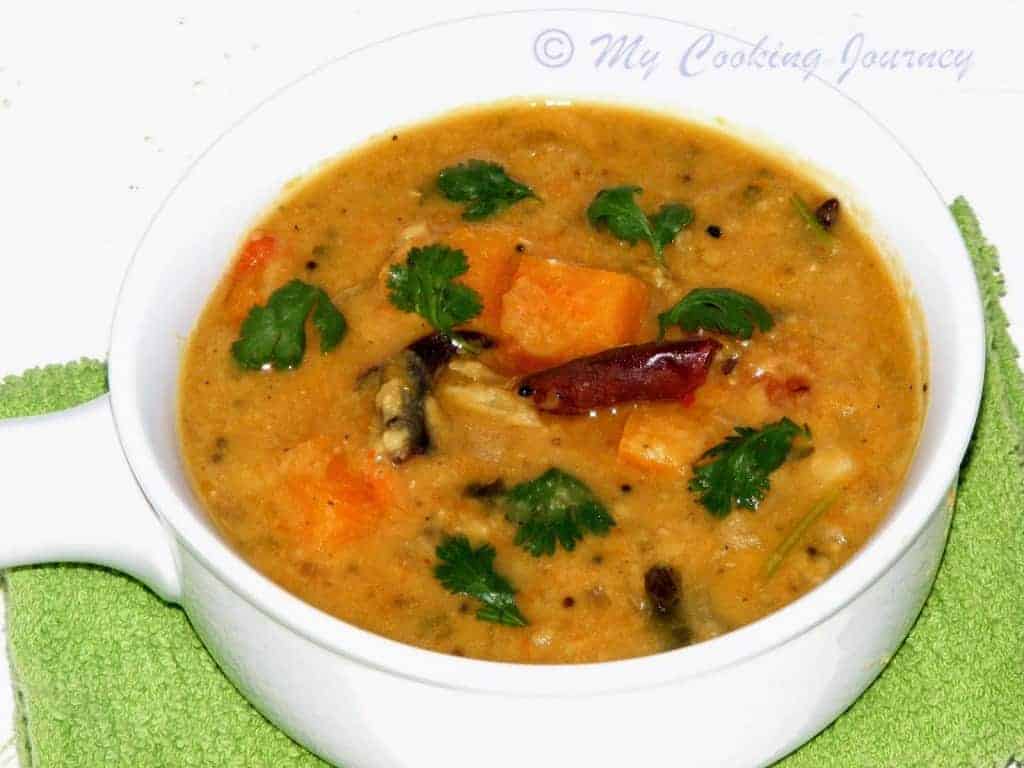
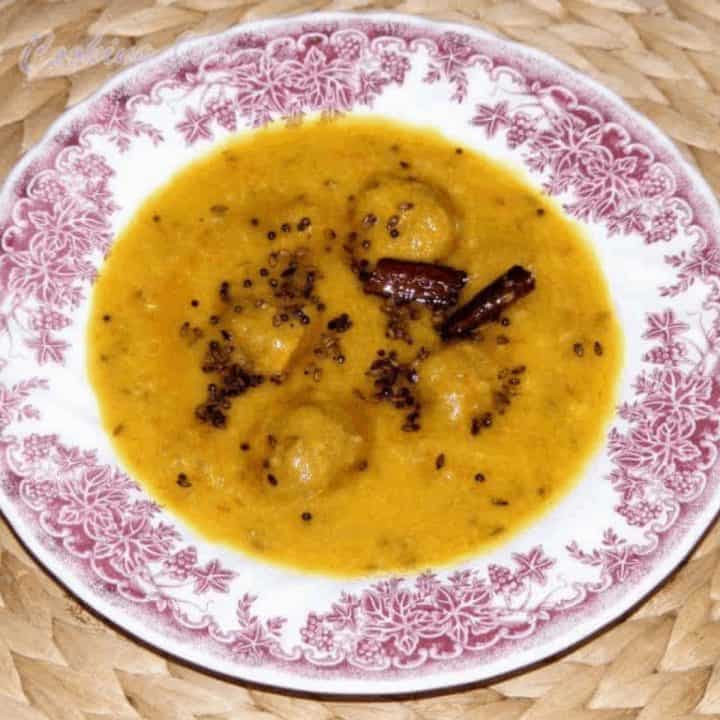
Pondicherry Sambar is a very flavorful and aromatic sambhar recipe from the region of Puducherry. The spices in the sambar are very distinct and that is what makes it stand out from the rest.
Puducherry, formerly called Pondicherry is a Union territory on the East Coast of India. It was the former French colony and often referred to as the 'French Riviera of the East'.
Many streets still retain their French names and French Villas are a very common sight.
Puducherry has a large number of Indians and also a few non-Indians with the descent French passport. The official languages of the state are Tamil, Malayalam, Telugu, and French.
Puducherry is very close to the city where I grew up and my favorite places to visit are the Aurobindo Ashram, Manakula Vinayagar temple, and of course the restaurants en route to my native place.
We always plan our trips in such a way that we are in Pondicherry right around lunch or dinner time. Even though I have eaten many times in Pondicherry until now I have never realized that they had a cuisine that is quite different from the Tamil Nadu cuisine.
They have a lovely blend of French and Indian styles in the cuisine. Also, the cuisine is influenced by the neighboring states which are Tamil Nadu, Kerala, and Andhra Pradesh.
The recipe I chose for today is from Aparna's blog, where she reviewed the cookbook, The Pondicherry Kitchen, by Lourdes Tirouvanziam-Louis.
I was able to read a few pages from the book that they had as a preview in Google Books and was happy to see several simple dishes. This Pondicherry sambar was quite different from the sambar that we often make and it tasted just wonderful.
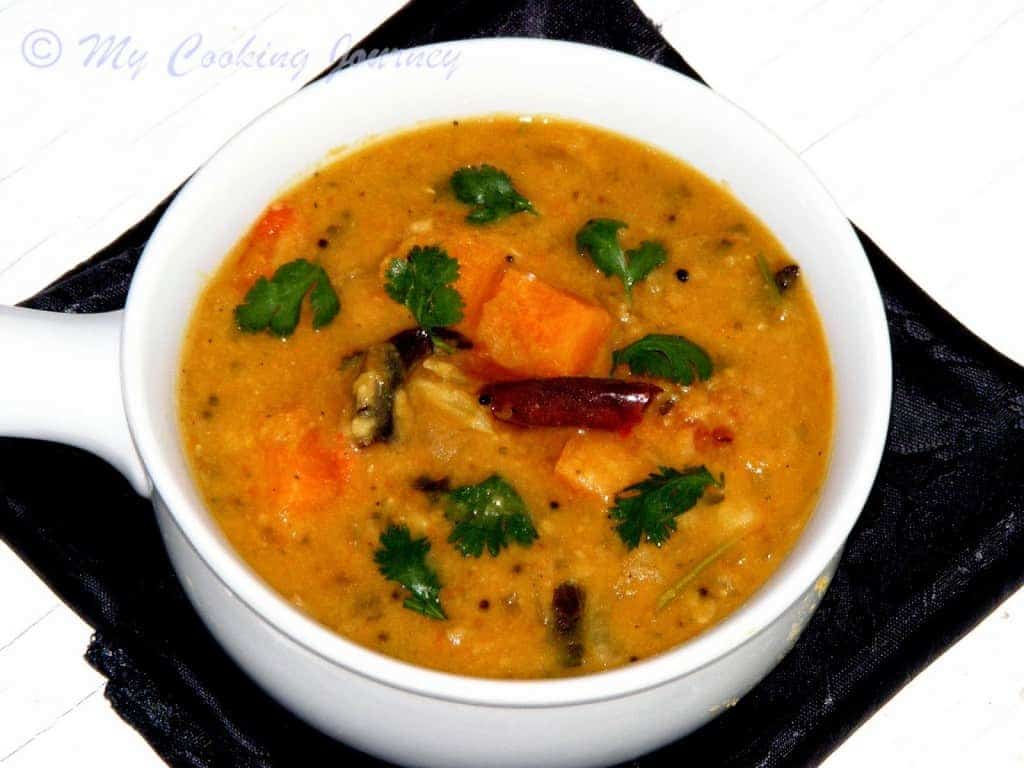
Ingredients to make Pondicherry Sambar
- Tuvaram paruppu / Toor dal - ¾ cup
- Yellow pumpkin (or any vegetable of your choice) - 2 cups (chopped into large chunks)
- Onion - 1 large (thinly sliced)
- Tomato - 2 (chopped)
- Garlic cloves - 3 (crushed)
- Tamarind pulp - ½ tbsp
- Jaggery - 1 tsp
- Curry leaves - few
- Cumin seeds - ½ tbsp
- Peppercorns - ½ tbsp
- Oil - 1 tbsp
- Mustard seeds - 1 tsp
- Ullutham paruppu/urad dal - 1 tsp
- Red chilies - ⅘
- Cilantro - few
- Salt - to taste
Step-by-step process
- In a pressure cooker, cook the toor dal in about 2 cups of water until it is soft and mushy. Let it cool down and then drain the cooked dal water into a bowl and keep it aside.
- In a pan, heat the oil and then add the mustard seeds, urad dal, asafetida, and red chilies. Let it fry for a minute.
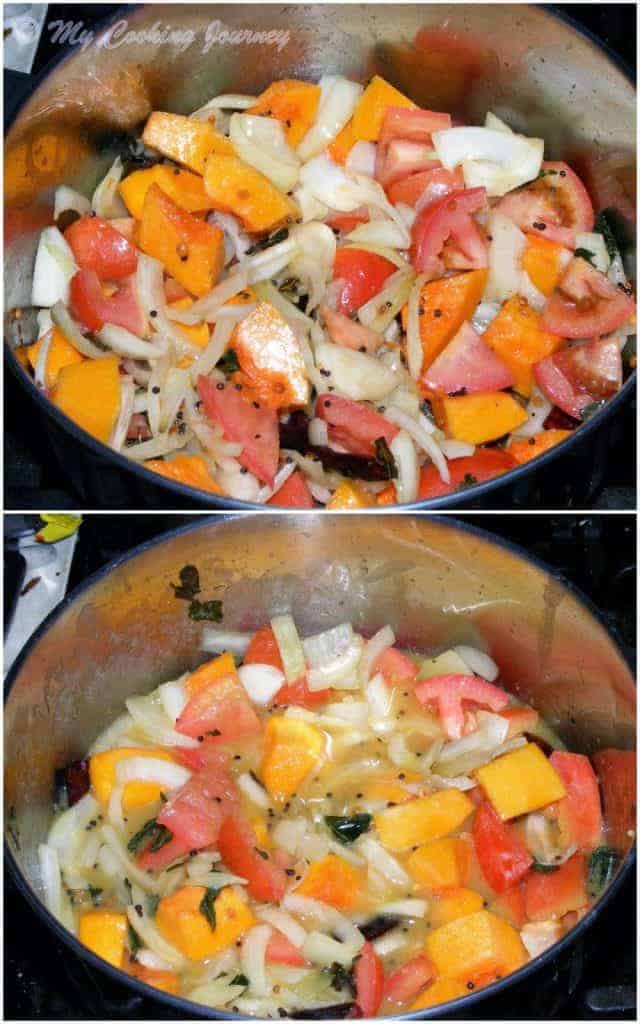
- Now add the red pumpkin or any other vegetable of your choice, onions, tomato, curry leaves, and sauté for a couple of minutes. Then add the cooked dal water, jaggery, and salt. Cover the pan and let the vegetables cook.
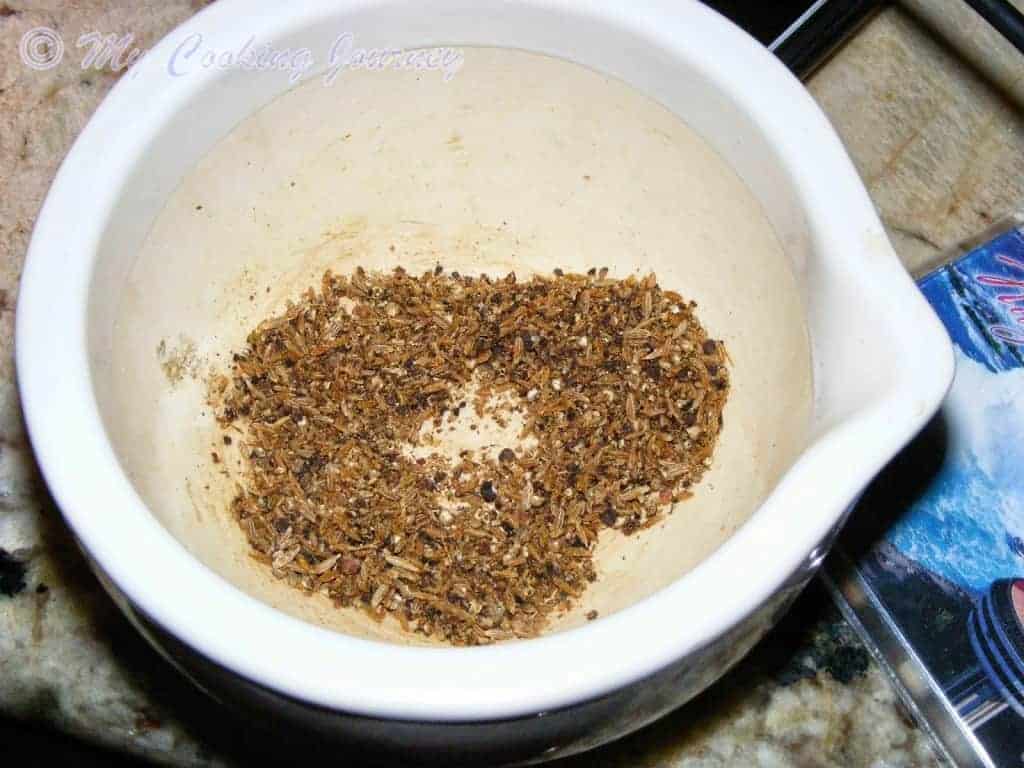
- Meanwhile, crush the garlic and pound the cumin and peppercorns in a mortar coarsely.
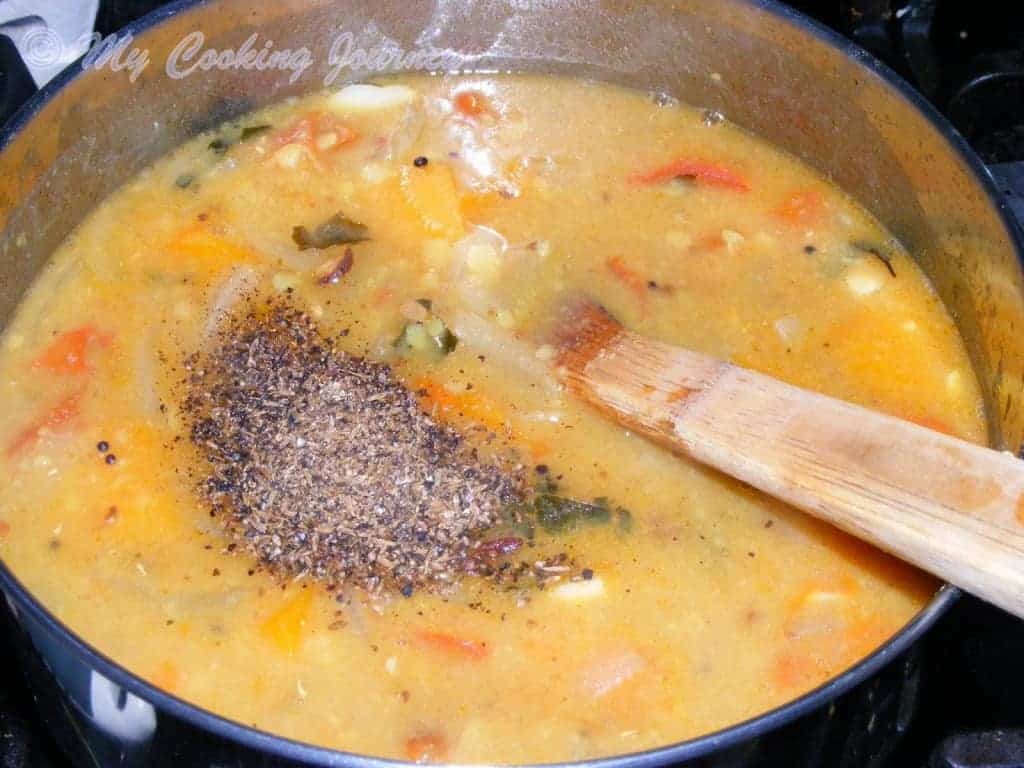
- When the vegetables are cooked, add the tamarind pulp, Cooked dal, crushed garlic cloves, crushed cumin and pepper, and also the cilantro leaves.
- Cover the pan and let it cook for 10 more minutes.
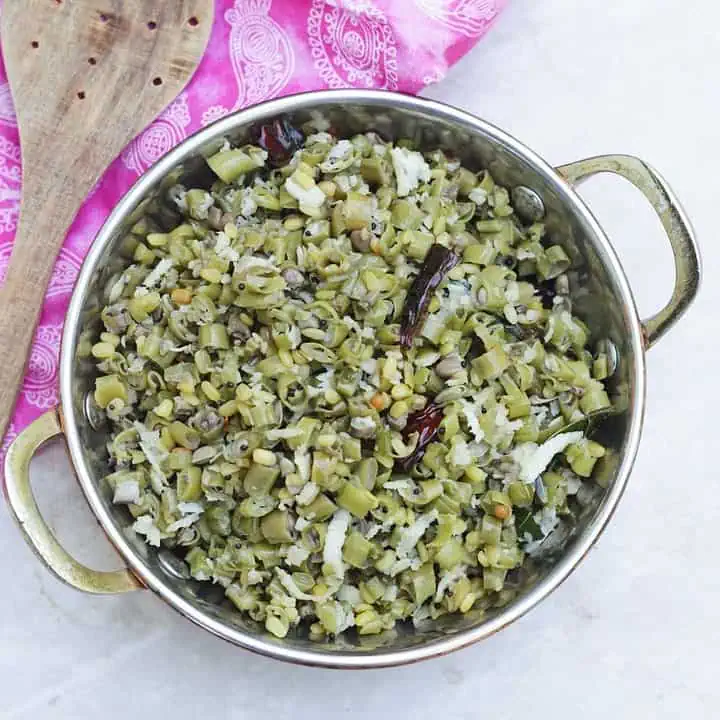
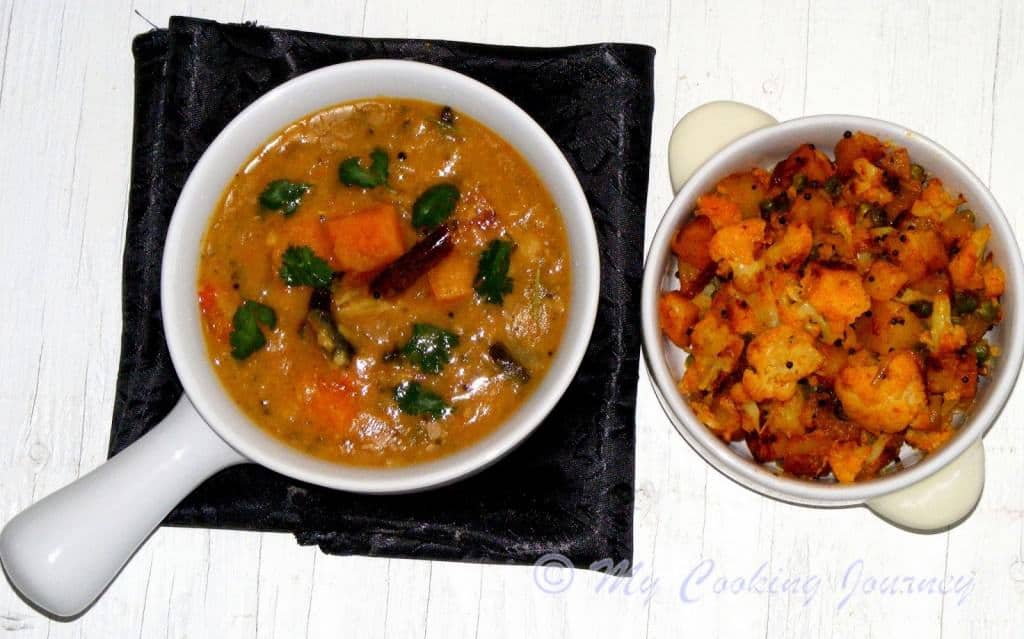
- Serve the Pondicherry Sāmbar hot with rice, ghee, and a vegetable on the side.
Other Side Dishes
If you made this recipe and liked it, give a star rating on the recipe card or let me know in the comments below. You could also share it with me on Instagram using #MyCookingJourney and tagging me @sandhya.ramakrishnan. You could follow me and my recipes on Facebook |Instagram | Pinterest | Twitter/X
Recipe
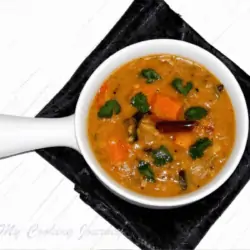
Pondicherry Sambhar | A special Sambhar from Puducherry
Equipment
- pan
Ingredients
- ¾ cup Tuvaram paruppu / Toor dal
- 2 cups Yellow pumpkin Or any vegetable of your choice (chopped into large chunks)
- 1 large Onion Thinly sliced
- 2 Tomato Chopped
- 3 Garlic cloves Crushed
- ½ tbsp. Tamarind pulp
- 1 teaspoon Jaggery
- few Curry leaves
- ½ tbsp. Cumin seeds
- ½ tbsp. Peppercorns
- 1 tbsp. Oil
- 1 teaspoon Mustard seeds
- 1 teaspoon Ullutham paruppu/urad dal
- 4 Red chilies
- few Cilantro
- to taste Salt
Instructions
- In a pressure cooker, cook the toor dal in about 2 cups of water until it is soft and mushy. Let it cool down and then drain the cooked dal water into a bowl and keep it aside.
- In a pan, heat the oil and then add the mustard seeds, urad dal, asafetida, and the red chilies. Let it fry for a minute.
- Now add the red pumpkin or any other vegetable of your choice, onions, tomato, curry leaves, and sauté for a couple of minutes. Then add the cooked dal water, jaggery, and salt. Cover the pan and let the vegetables cook.
- Meanwhile, crush the garlic and pound the cumin and peppercorns in a mortar coarsely.
- When the vegetables are cooked, add the tamarind pulp, Cooked dal, crushed garlic cloves, crushed cumin, and pepper, and also the cilantro leaves.
- Cover the pan and let it cook for 10 more minutes.
- Serve the Pondicherry sambhar hot with rice, ghee, and a vegetable on the side.